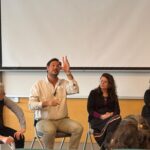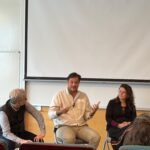
Bora Sezer Shares Insights on VR in Anthropology at ÖzÜ Anthropology Forum
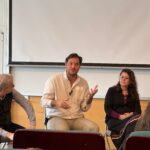
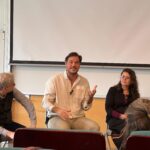
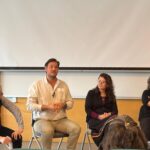
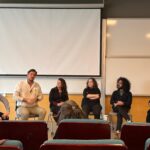
This week, Bora Sezer was invited to speak at a special Anthropology Forum held as part of Özyeğin University Anthropology Days—an event designed to highlight how deeply anthropology connects with the many disciplines that shape academic life at ÖzÜ.
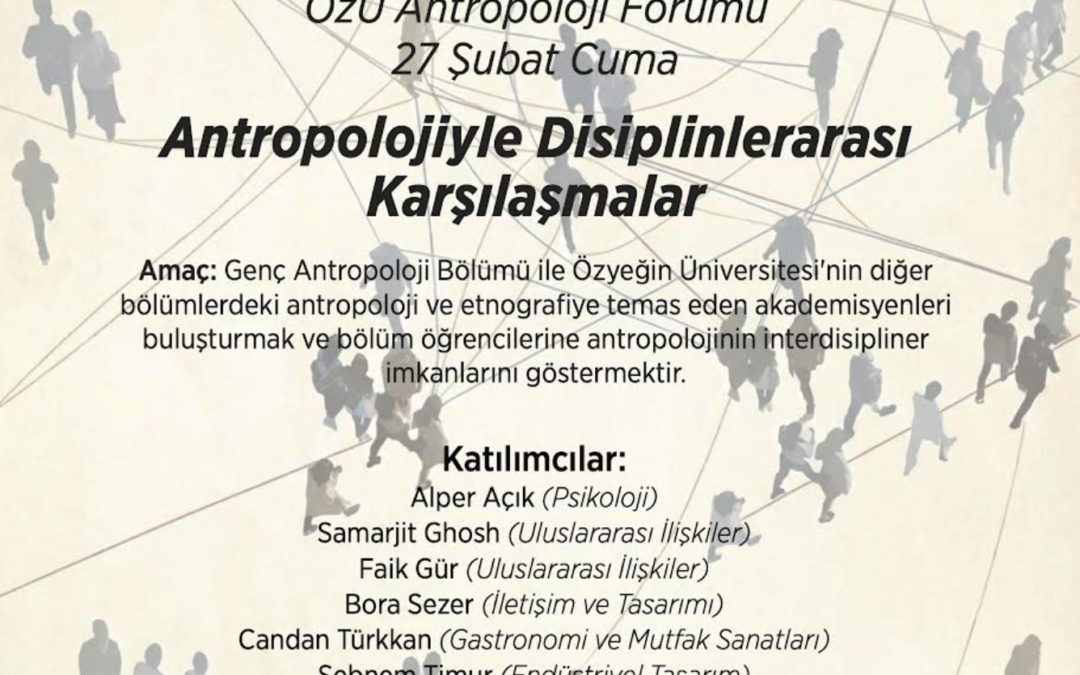
The goal of the forum was clear: to bring together academics from different departments whose research or practice touches upon anthropology and ethnography, and to show students of the newly established Anthropology Department just how rich, diverse, and interdisciplinary the field truly is. The panel gathered a group of inspiring scholars from across the university, including Bora Sezer (Communication Design), Şebnem Timur, Alper Açık, Faik Gür, and Candan Türkkan. The discussion was facilitated by Ali Sipahi, who guided the conversation across themes ranging from human behavior and cultural heritage to design, global politics, and food culture.
During the forum, Sezer offered key insights into how Virtual Reality (VR) can function as a powerful medium for anthropology. Drawing on projects such as the Magnesia Epiphany VR experience and the reconstruction of the Temple of Apollo at Didim, he demonstrated how immersive environments can communicate complex archaeological and anthropological narratives in ways that traditional media often cannot. He emphasized that fields such as anthropology and archaeology frequently struggle to convey their findings to wider audiences due to their abstract and interpretive nature.
Speaking from his position within the Communication Design discipline, Sezer argued that the presentation of scientific knowledge is itself a design problem. He noted that designing modes of scientific communication “particularly for fields like anthropology” is an integral part of communication design. In this context, VR emerges not only as a visualization tool but as a communication medium that enables audiences to experience knowledge rather than simply observe it. By translating research outcomes into immersive experiences, VR offers a more accessible, engaging, and effective way of communicating cultural heritage.
Held on Friday, February 27, the forum created a vibrant space where disciplines met, perspectives intertwined, and students had the opportunity to experience anthropology not as an isolated field, but as a dynamic lens that intersects with design, technology, and storytelling.