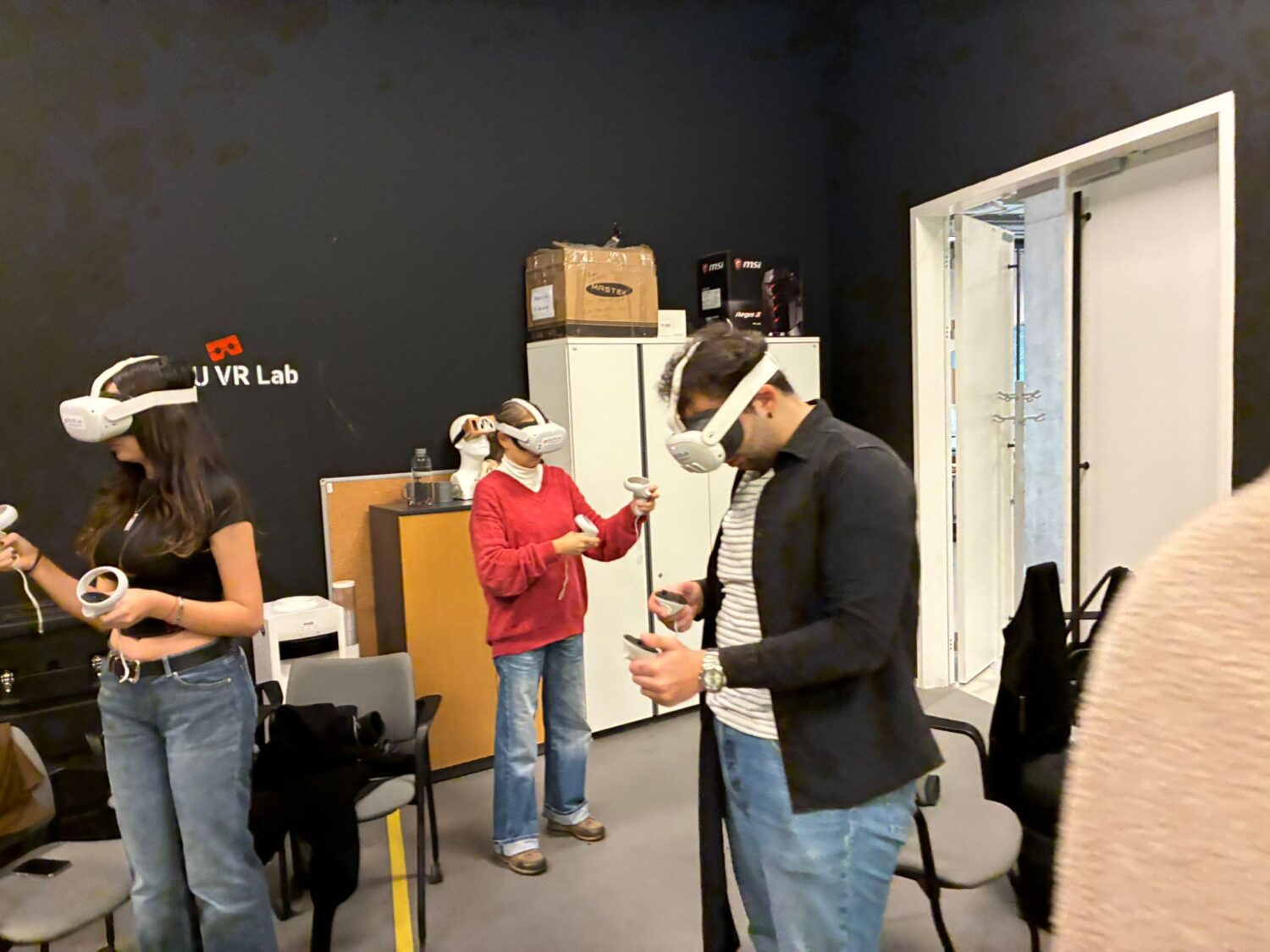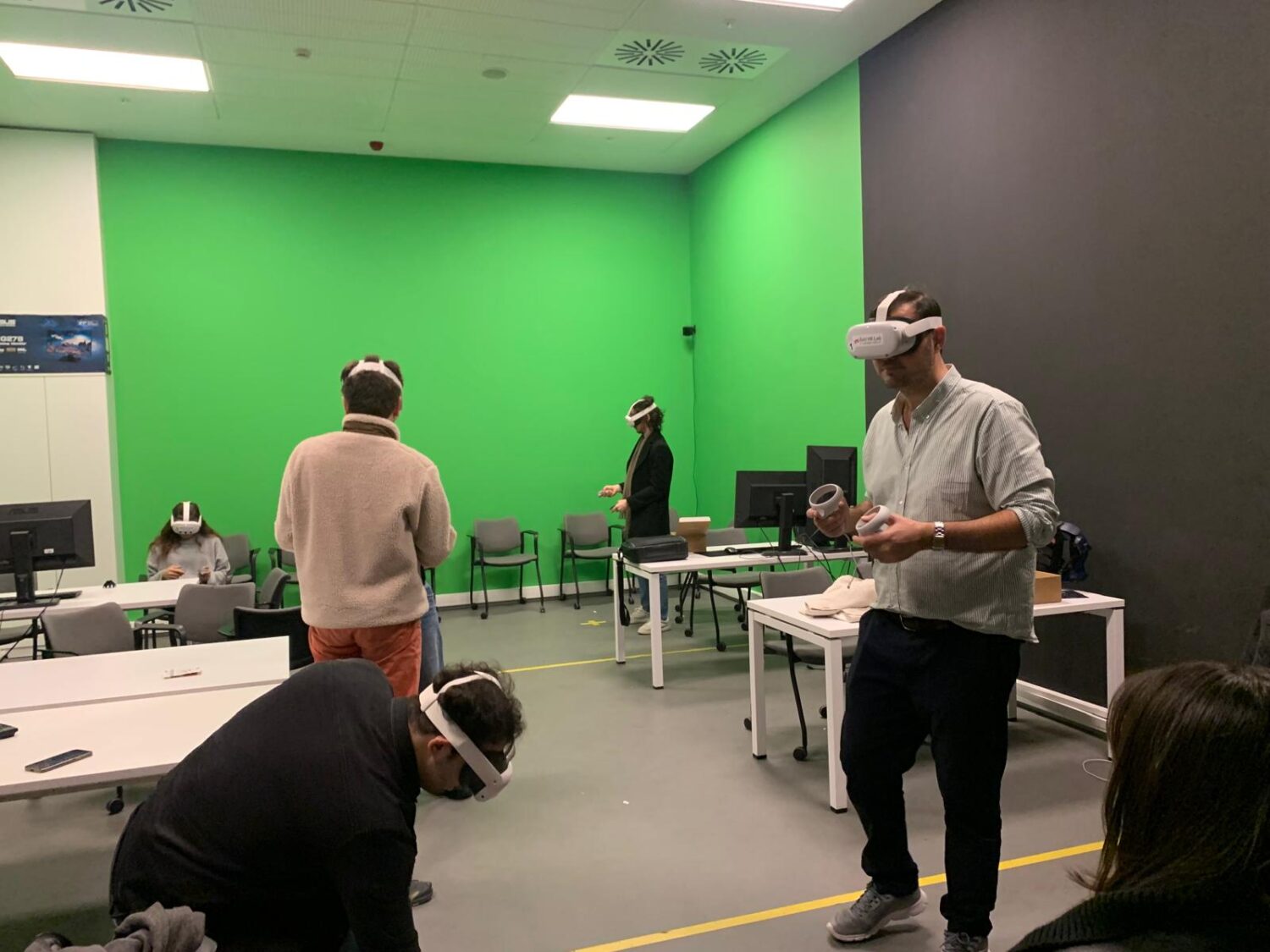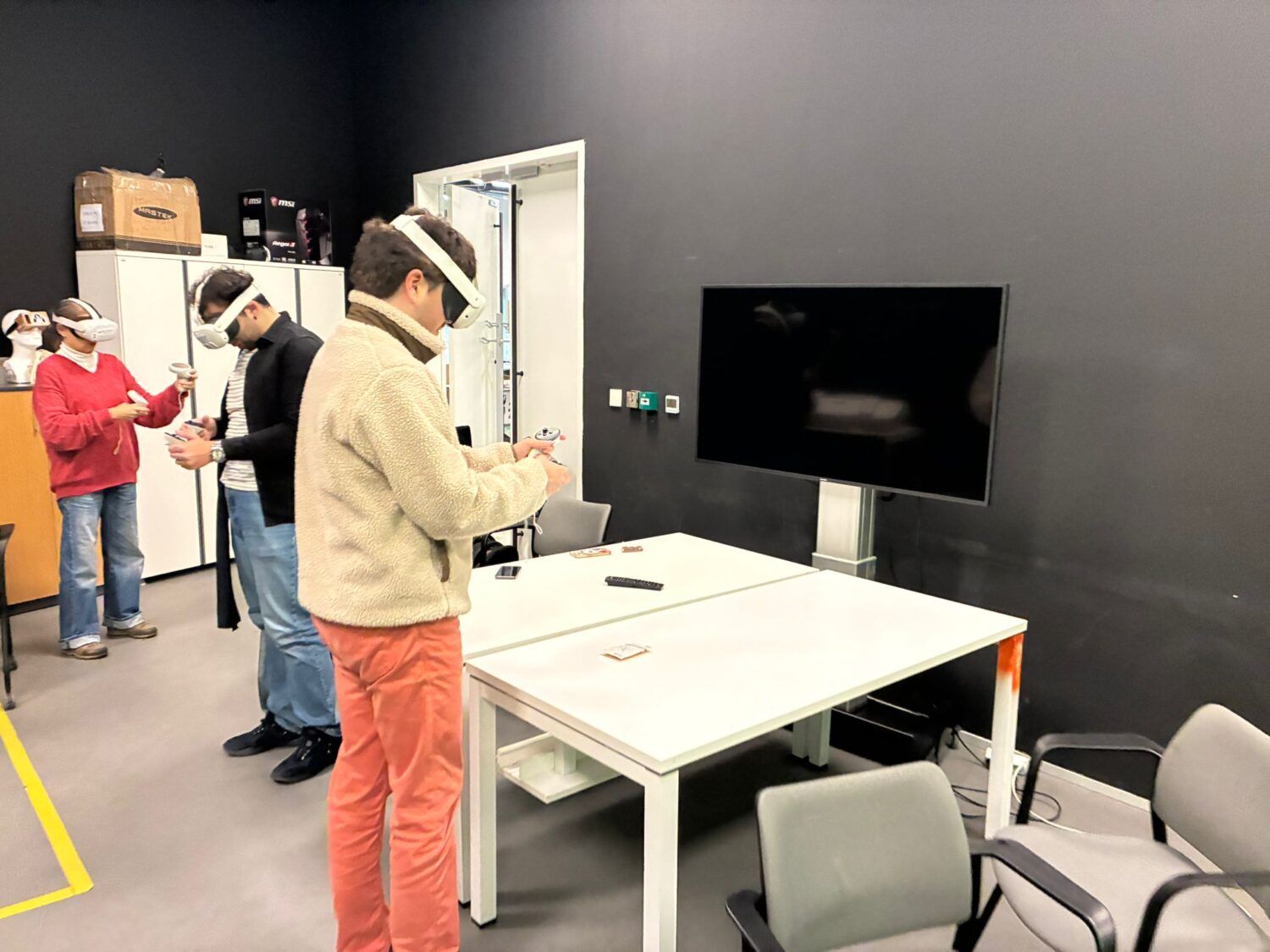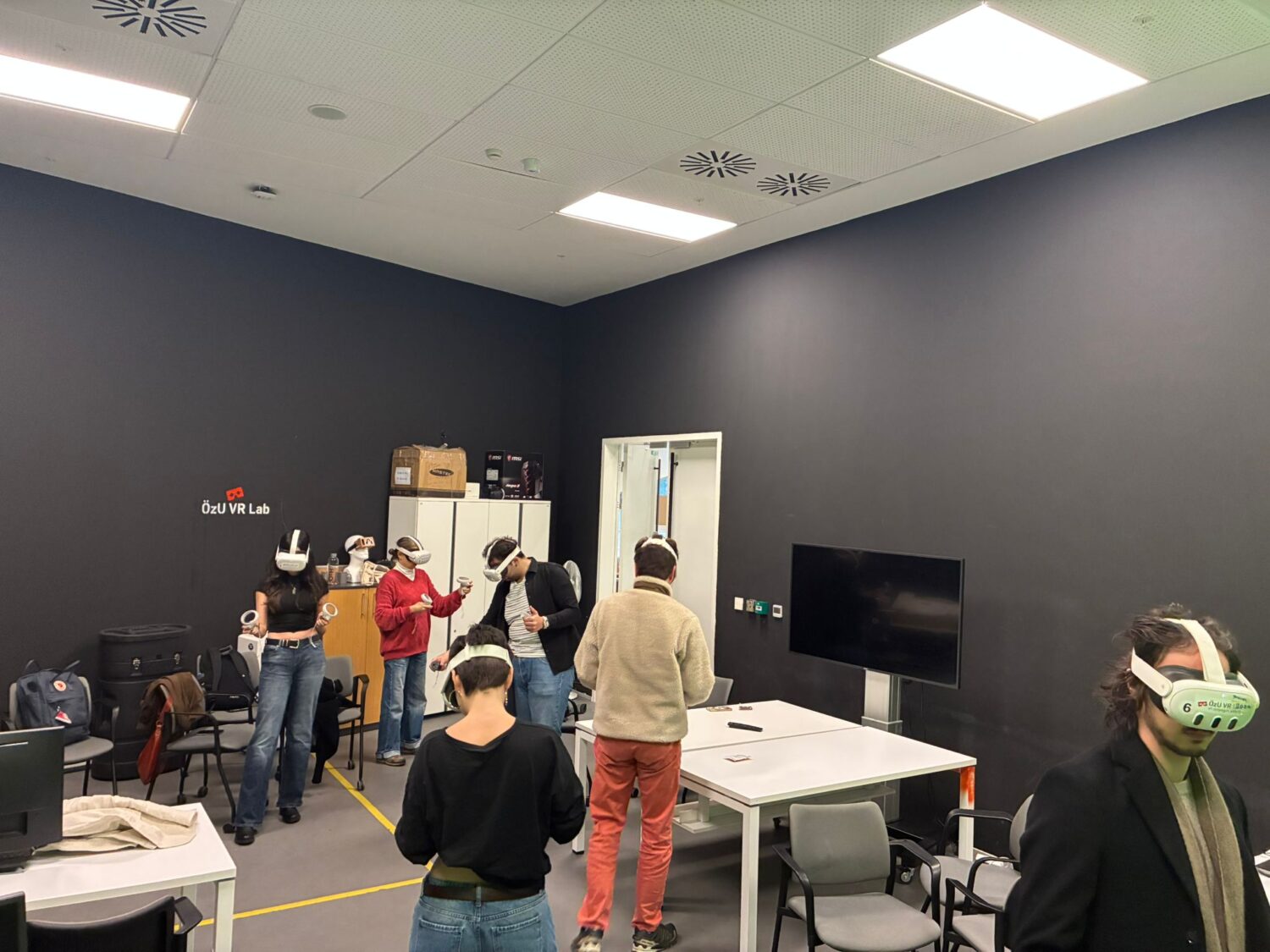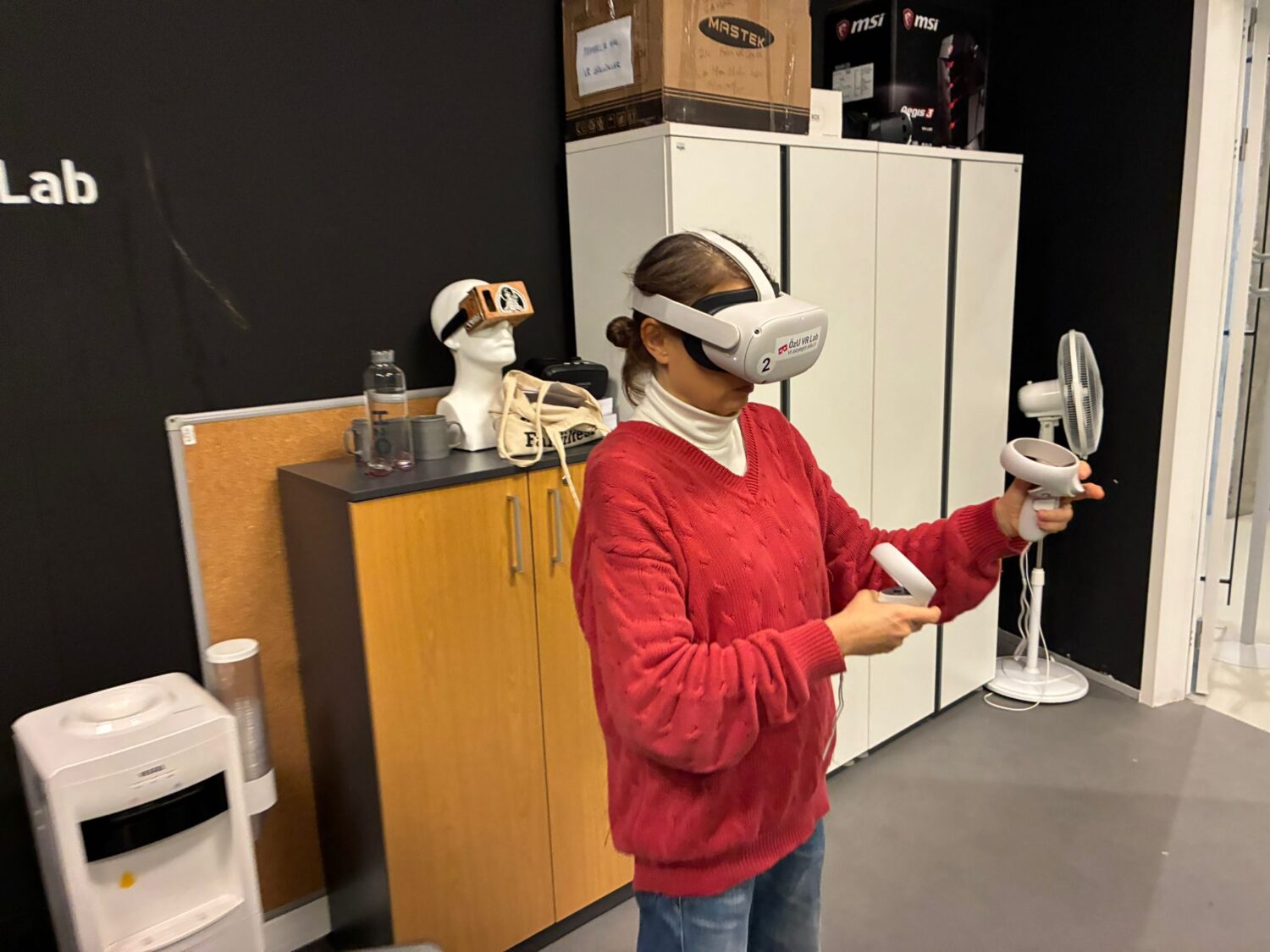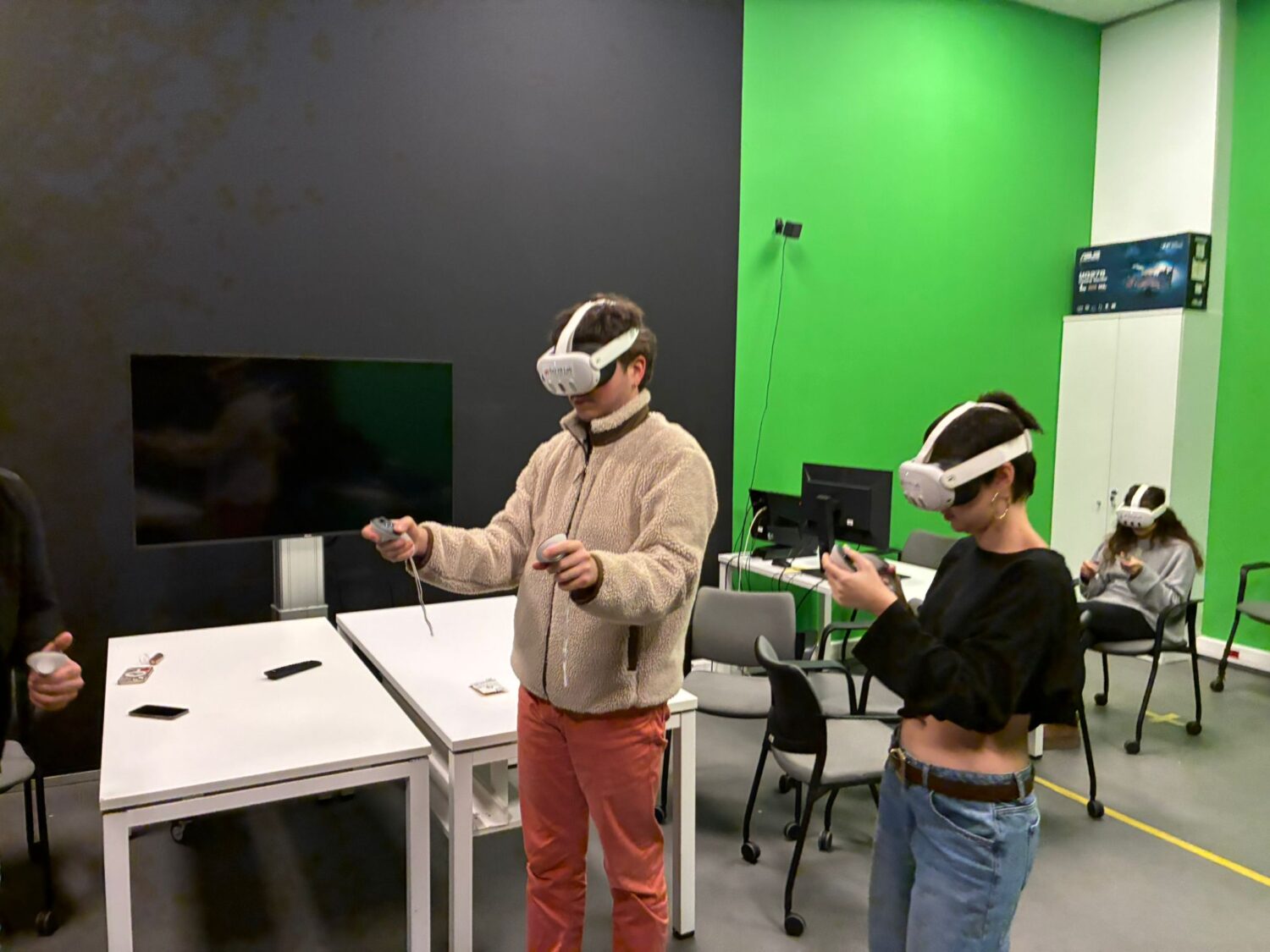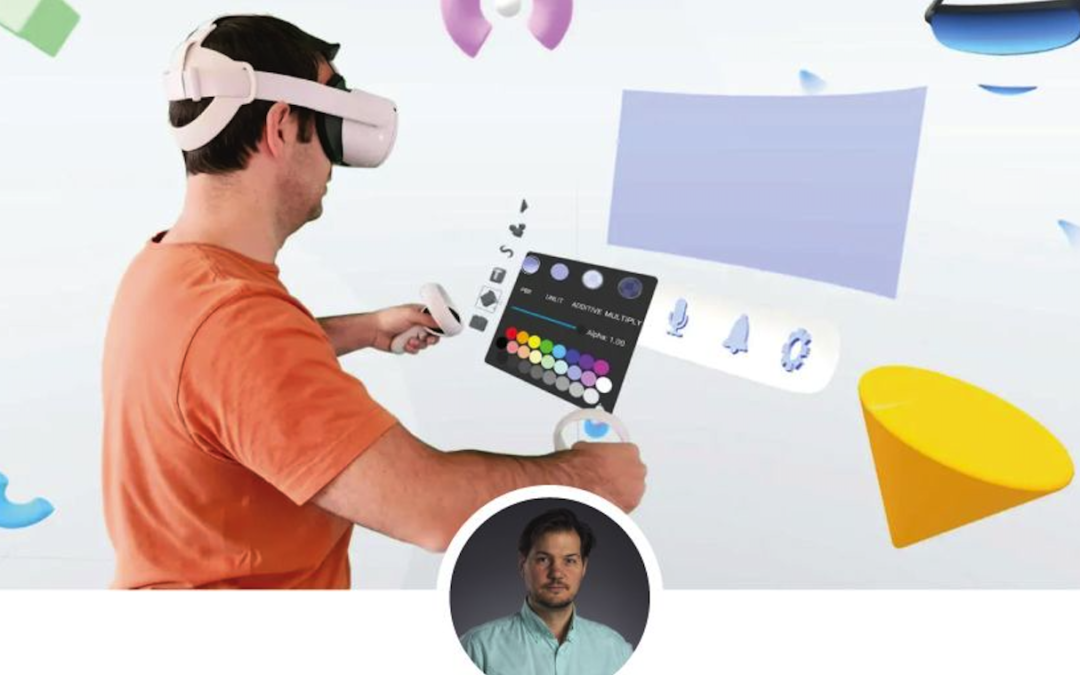
C. Bora Sezer from the Department of Communication Design delivered a seminar titled “Inside the Interface: Interaction Design for Virtual Reality” on Friday, December 5th at 13:30 in Room B221, Faculty of Architecture and Design. The seminar explored the transformation of design experiences through Virtual Reality and examined how VR is reshaping the relationship between humans, space, and digital creation.
Beginning with a historical overview of Virtual Reality, the presentation traced the evolution of immersive technologies from Morton Heilig’s Telesphere Mask (1960) and Sensorama (1962) to Ivan Sutherland’s Sword of Damocles, NASA’s VIVED systems, the failed VR attempts of the 1990s, and the breakthrough moment of modern VR with Oculus Rift and contemporary game engines after 2014. The seminar also discussed how advancements in display technology, gyroscope sensors, frame rates, and real-time rendering made today’s immersive VR experiences possible.
The session continued with an exploration of core interaction principles in Virtual Reality, including navigation systems, teleportation, laser-pointer interaction methods, object manipulation, scaling, rotation, selection systems, depth perception, comfort zones, and seated versus standing interaction fields. Particular emphasis was placed on how VR shifts interaction design away from flat screen-based interfaces toward embodied, spatial experiences where users interact with digital environments through movement, gestures, and physical behaviors.
Another major focus of the seminar was the relationship between spatial intelligence and creativity. Drawing on Howard Gardner’s theory of multiple intelligences, the presentation examined how traditional digital design tools often prioritize mathematical and technical thinking over intuitive visual-spatial thinking. In contrast, VR was presented as a medium that directly supports spatial intelligence by allowing designers to think, sketch, shape, and experience ideas naturally in three dimensions and at human scale.
The seminar also introduced three fundamental interaction principles for immersive design environments: Physicality, Immediacy, and Simple Rules. These principles emphasized intuitive bodily interaction, immediate visual feedback, and minimal interface complexity as essential components of creative flow within VR environments. The presentation argued that immersive technologies become most effective when interfaces become nearly transparent and users can focus directly on expression and imagination rather than technical commands and menus.
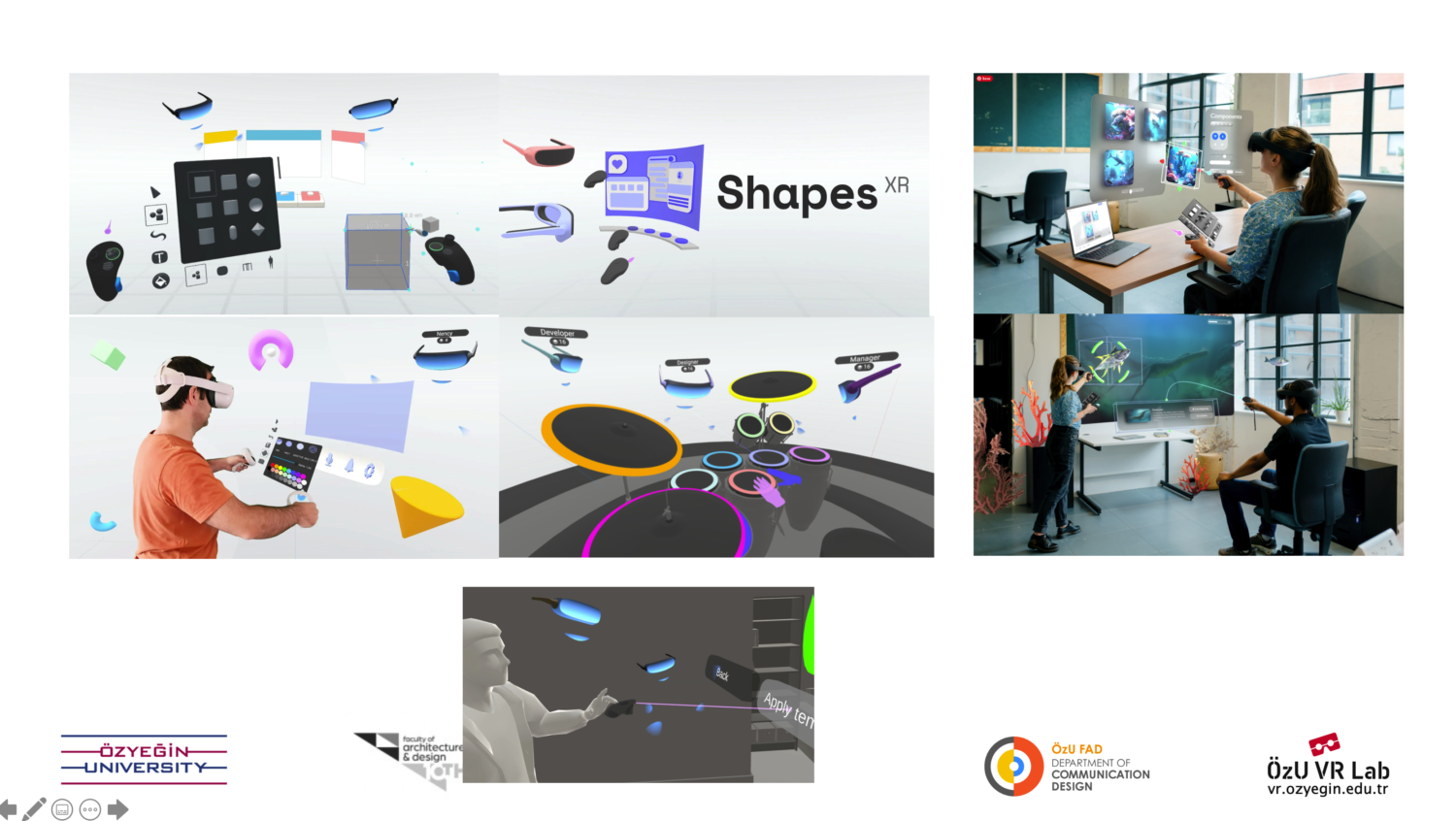
Additional topics included embodied interaction, collaborative design in shared virtual spaces, language-independent interaction systems, and the growing role of VR in fields such as architecture, game design, product design, fashion, interactive media, and digital art. The seminar concluded with demonstrations and discussions of contemporary VR design applications and tools including ShapesXR, Gravity Sketch, Arkio, Tilt Brush, King Spray, and SculptrVR, highlighting how these platforms are already transforming creative workflows and design education today.